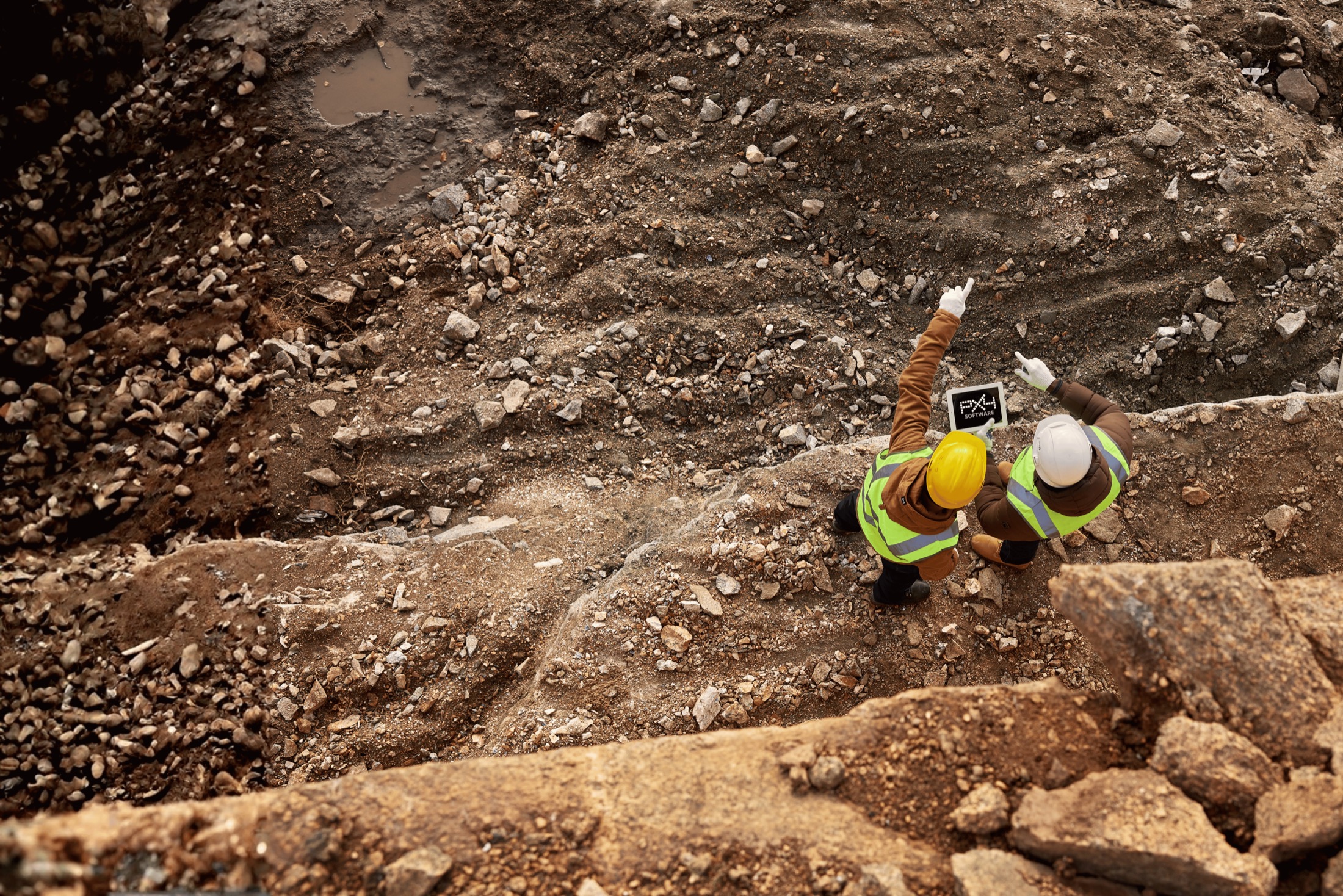
A land and resource management platform serving 67 jurisdictions hit its ceiling. AI agents, AWS co-investment, and a fundamentally different delivery model broke through it — without a single compliance gap.
Codex is an Australian-owned, AWS-native data and AI consultancy. PX4 is a Brisbane-based land and resource management platform that keeps exploration, tenement management, and critical minerals supply chain compliance on track — across 67 jurisdictions, serving enterprise customers globally.
The cost of doing nothing was too great.
With ambitious growth plans, PX4 needed a platform that could scale.
The legacy platform
The architecture that enabled PX4’s early growth had become the barrier to further scale: 30+ second response times, more than half of engineering spend locked in bug-fixing, and no path to the 150-jurisdiction vision.
What Codex delivered
AI agents reverse-engineered the platform without source code access in under a week. AWS MAP co-investment covered approximately half of the total project cost. The AI-native delivery model — assessment, architecture, development, migration and managed run — ran 60–70% faster than traditional approaches, without a single compliance gap.
The result
A cloud-native, geospatially-enabled platform empowering rapid customer growth - projecting more than $3M AUD annualised benefits from FY28 - whilst reclaiming engineering investment from maintenance to innovation
Built in Brisbane.Compliant in 67 jurisdictions.Scaling past 150.Powering the critical minerals the world needs.
Built from the ground up
A land and resource management compliance software CEO who needed to scale. An engineering team who rethought how to build. A cloud partner who co-invested in the vision. Three organisations. One outcome none could have delivered alone.
Chapters
The engagement
From problem to platform.
PX4 didn’t need a migration. They needed a reinvention.
01
The problem
Compliance nobody could scale
Tens of thousands of tenement authorities across 67 jurisdictions — each with its own rules, forms and deadlines. A platform that had powered the business for years — but had become the ceiling.
30+ second response times
More than half of engineering spend locked in bug-fixing
No path to the 150-jurisdiction vision
Miss one renewal and a licence to operate is at risk
02
The approach
Agents that read the platform in a week
AI agents reverse-engineered the existing platform without source code access. That assessment became the blueprint, and AWS MAP cleared the commercial barrier to starting.
Platform reverse-engineered in under a week
No source code access required
AWS MAP co-investment: ~$660K of $1.37M
AI-native delivery across all five stages
03
The result
A globally complex and integrated platform, delivered in six months
A cloud-native, geospatially-enabled platform built to pass 150 jurisdictions — and a delivery model PX4 keeps using long after go-live.
30–40% faster delivery, no compliance gap
$3M+ AUD annualised benefits projected from FY28
120% customer growth: 55 to 121 by EOFY29
Engineering reclaimed from maintenance to innovation
Business outcomes
What changed for PX4
What a six-month rebuild unlocked for the business.
01
A multi-year roadmap delivered in six months
02
Engineering reclaimed from maintenance to innovation
03
Compliance, rehabilitation and land access obligations across 67 jurisdictions — built to scale past 150
Multi-region deployment with data sovereignty built in
Product & platform
What we built
Global scale
Reinvention at global scale
A Brisbane company and a global cloud partner. Every pin on this map is a jurisdiction where the critical minerals the world needs are being accessed, and where land access, community obligation and regulatory compliance is managed. The platform runs where the minerals are. The cloud infrastructure runs where the data needs to stay. Safe. Secure. Sovereign. On AWS.
Toby CarriganCEO, PX4
The customer
“The cost of doing nothing was too great.”
Behind every responsibly developed mine are thousands of complex decisions — balancing environmental obligations, native title, government approvals, landholders and communities. When those decisions are easier to make, projects move faster, mistakes are reduced and the impact on people and the environment can be better managed.
PX4’s transformation wasn’t simply about replacing ageing technology. It was about giving the business — and its customers — the tools to continue improving the way land is managed, enabling smarter decisions today while creating a platform ready for the future.
This isn’t the end of the journey — it’s the beginning of what’s next.
Those decisions aren’t becoming simpler — they’re becoming more important. What began as a platform rebuild became something much bigger: a reinvention of what PX4 could offer its customers. Not simply a platform capable of supporting more jurisdictions, but one capable of supporting the industries shaping the future.
Countries around the world have committed to ambitious decarbonisation targets, but achieving them will require an estimated ten times more critical minerals than we produce today. From renewable energy infrastructure and electric vehicles to hospitals, communications and advanced manufacturing, the transition to a more sustainable future depends on responsibly accessing the resources beneath our feet.
That future cannot be achieved by extracting more resources alone. It requires better decisions — balancing environmental obligations, landholder relationships, native title, government approvals and community expectations with greater confidence than ever before. As projects become larger, regulations become more complex and expectations continue to rise, the technology supporting those decisions must evolve alongside them.
PX4 is the platform that helps organisations navigate the complexity of extracting those resources — responsibly. By transforming its platform with Codex and AWS, PX4 has positioned itself to help customers navigate that complexity on a global scale. The result is more than a faster platform or a growing business. It is a stronger foundation for best-practice land management — helping the resources sector move faster where it should, more carefully where it must, and ultimately supporting better outcomes for industry, communities and the environment.
Toby VannCo-founder & CCO, Codex
Codex
“The innovation was never just the technology itself.”
Most digital transformation projects don’t fail because of technology — they fail because organisations start with the solution before they fully understand the problem. When technology leads the conversation, businesses often spend years building systems that solve yesterday’s challenges instead of tomorrow’s opportunities.
At Codex, transformation begins differently. By understanding how a business operates, identifying where the greatest value can be created and building confidence before delivery begins, technology becomes an enabler rather than the starting point. The result isn’t simply faster software — it’s smarter transformation with better business outcomes.
Critically, Codex brought an AI-native delivery model that made the impossible timeline achievable. But methodology alone doesn’t deliver transformation at this scale. It required a customer willing to reimagine their business, a cloud partner willing to co-invest in the outcome, and a delivery team willing to move at a pace the industry hadn’t seen.
What once took years now takes months.
PX4 was a perfect example of why Codex’s approach matters. As the business expanded into North America and prepared to support significantly greater data volumes, rebuilding the existing platform wasn’t enough. The challenge wasn’t simply modernising technology — it was ensuring the next platform could support the business for years to come.
Rather than jumping straight into delivery, Codex worked alongside the PX4 team to understand the business first. Together, they identified where the greatest opportunities existed, challenged long-held assumptions and built confidence in the transformation before major development began. That shared understanding became the foundation for every technical decision that followed.
With AWS providing the cloud platform, technical expertise and support through the MAP program, Codex was then able to deliver the transformation using a fundamentally different approach. AI was embedded throughout the entire software development lifecycle — from requirements and architecture through to engineering, testing and deployment — allowing the team to automate repetitive tasks and focus their expertise where it created the greatest value. The benefit wasn’t simply a faster project. It was a delivery model that reduced uncertainty, accelerated decision-making and helped PX4 realise value far sooner than traditional approaches.
The result was more than a successful platform rebuild. Together, PX4, Codex and AWS demonstrated a new model for enterprise transformation — one where business strategy leads, technology enables and innovation is measured not by how software is built, but by the confidence, speed and long-term value it creates for customers.
AWS
“Partnering with AWS was simply a no brainer.”
PX4 is a late-stage startup that couldn’t have attempted a transformation of this magnitude alone. Every transformation reaches a point where ambition needs the right support to become reality. For PX4, that support came through AWS’s Migration Acceleration Program (MAP) — a unique combination of funding, technical expertise and dedicated guidance designed to help organisations reduce the risk of transformation and move forward with confidence.
Rather than simply providing cloud infrastructure, AWS partnered with PX4 and Codex from the earliest stages of the project. Through dedicated Account Managers, Solution Architects and engineering specialists, the team could validate decisions, challenge assumptions and build a clear roadmap before major delivery began. The result wasn’t just confidence in moving to AWS — it was confidence that the transformation itself was heading in the right direction.
What made this engagement different wasn’t any single contribution — it was the compounding effect of three organisations operating as one team, with shared risk and shared ambition.
It went far beyond funding — it was expertise.
For many organisations, digital transformation isn’t limited by technology — it’s limited by confidence. Large-scale projects involve significant investment, complex technical decisions and long-term business risk. AWS created the Migration Acceleration Program to help remove those barriers, combining funding with hands-on technical expertise so organisations can modernise with greater certainty and less risk.
For PX4, MAP created the opportunity to properly assess the future of the platform before committing to a major transformation. Rather than assuming what needed to change, Codex, PX4 and AWS worked together to understand the business, validate priorities and establish a roadmap that aligned technology decisions with long-term business goals. That collaborative approach significantly reduced uncertainty before development even began.
As delivery progressed, AWS remained an active partner. Dedicated Account Managers, Solution Architects and engineering specialists worked alongside the Codex team, providing architectural guidance, validating technical decisions and helping ensure the platform was built using modern AWS-native services. That expertise wasn’t simply about building on AWS — it was about building the right solution for PX4’s future.
The benefits extend well beyond launch. By leveraging AWS-native architecture, the new platform is designed to scale more efficiently, automate much of the underlying operational overhead and provide a foundation for continuous innovation. Instead of investing valuable time maintaining infrastructure, PX4 and Codex can focus on what matters most: delivering new capability, responding to customer needs and continuing to improve the way land management is supported around the world.
The PX4 transformation demonstrates the value of an ecosystem approach to innovation. PX4 brought the vision, Codex brought the transformation methodology, and AWS contributed funding, technical expertise and global cloud capabilities. Together, they achieved an outcome that would have been significantly more difficult for any one organisation to deliver alone. That’s the philosophy behind MAP and why AWS continues investing in Australian businesses with the ambition to build, innovate and grow on a global stage.
Innovation at every stage
Five stages. One integrated lifecycle.
Innovation applied once is a feature. Innovation applied at every stage — by three organisations working as one — is a methodology. Here’s what that looks like across a full engagement lifecycle.
01Assess
AI agents read the platform in a week
AI agents reverse-engineered PX4’s legacy platform without source code access — mapping architecture, dependencies and business logic in under a week. No discovery workshops. No assumptions. A full blueprint produced at a pace that would have taken a traditional team months.
02Architect
Designed for 150 jurisdictions, not 67
A decoupled, service-oriented architecture built on AWS — with embedded GIS, isolated per-tenant infrastructure, and data sovereignty by design. Not a migration. A reimagination.
03Develop
AI-native delivery model as a force multiplier
AI-assisted practices embedded across requirements capture, code generation, testing and documentation. The result: sub-9-month delivery — 30–40% faster than traditional approaches — without compromising quality. A team empowered to focus on innovation at the edge, not repetition at the core.
04Migrate
Zero compliance gaps across 67 jurisdictions
Every piece of jurisdictionally-specific business logic captured, translated and validated. Customer migration underway with no disruption to live compliance operations. Not a single renewal missed. Not a single authority dropped.
05Manage
A delivery model retained for the run
The engagement didn’t end at go-live. Codex continues to operate an AI-native delivery model across PX4’s managed run — building net-new capability, not maintaining legacy debt. Engineering investment shifted from >50% bug-fixing to innovation.
Explore the wider capability
More examples of related outcomes and capabilities.